
Why Every Business Needs a High-Converting Website
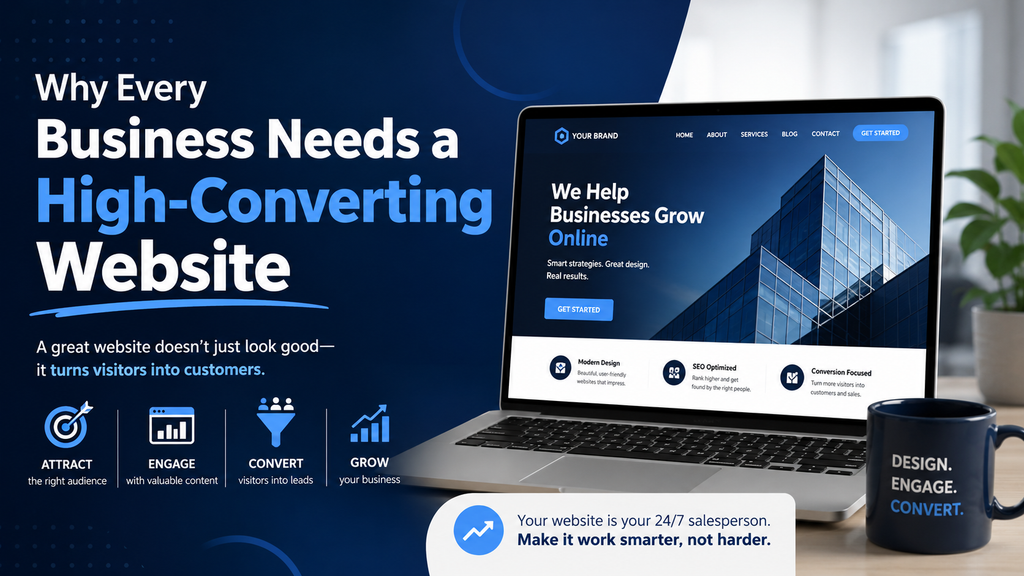
Long before a potential customer picks up the phone or walks through your door, they have already met your business online. Your website usually gets there first, and how it performs in that moment shapes whether the relationship continues or ends right there. A high-converting website has stopped being a nice extra for big-budget companies. It has become something every business, regardless of size, needs to take seriously if growth is the goal.
This article looks at what it really means for a website to convert well, why the stakes are higher than most owners assume, and what you can do to shape your site into something that actively generates business rather than just sitting online.
What Do We Mean by “High-Converting”?
A website earns the label “high-converting” when it reliably nudges visitors toward taking action, not just browsing. That action might look different depending on the business. Some common examples include:
- Filling out an inquiry or contact form
- Joining an email list
- Completing a purchase through an online cart
- Scheduling a call, demo, or appointment
Notice the word “reliably.” Loads of websites pull in decent traffic numbers, yet that traffic is worthless if nobody does anything once they arrive. A site built for conversion doesn’t leave this to chance. Every page, button, and piece of copy is arranged to move a visitor closer to a decision.
Why Your Website Carries More Weight Than You Realize
1. It Never Stops Working
There’s no closing time for a website. While your team sleeps, your site is still greeting new visitors, presenting your services, and (ideally) collecting leads. A clunky, confusing site squanders that constant availability. A well-tuned one keeps earning for you around the clock without anyone lifting a finger.
2. Judgment Happens Almost Instantly
Research into user behavior consistently finds that people size up a website within moments of arriving. A sluggish page, a messy layout, or navigation that makes no sense will push someone toward a competitor before they’ve even read your headline. A site that feels fast, clean, and easy to use earns trust immediately, and trust is what conversions are built on.
3. It Shapes How Trustworthy You Appear
Picture landing on a business site that feels years out of date or is a hassle to click through. Would you feel confident handing over your money or contact details? Most people wouldn’t. Your website communicates, often without words, how much care and professionalism you bring to your work. A polished, thoughtfully built site tells visitors your business can be trusted.
4. It Ties Your Entire Marketing Strategy Together
No matter where your traffic originates, whether that’s paid advertising, organic search, social platforms, or email outreach, it almost always funnels back to your website. When that destination isn’t set up to convert, every dollar spent getting people there is being wasted on a dead end. A site built to convert makes sure the rest of your marketing budget actually produces results.
5. It Gives Smaller Businesses a Real Shot
You don’t need a massive advertising budget or a household name to compete. A business with a smart, well-executed website can look just as credible and capable as competitors many times its size. In a lot of cases, the website itself becomes the great equalizer.
What Actually Makes a Website Convert Well
There’s no mystery formula here. High-converting sites tend to share a handful of deliberate design and content choices.
A Value Proposition That’s Instantly Clear
Someone landing on your homepage should grasp what you do and why it matters to them within a few seconds, not after scrolling through paragraphs of vague marketing language. Say plainly what problem you solve.
Pages That Load Quickly
Each additional second a page takes to load pushes more visitors toward the exit. Compressing images, choosing dependable hosting, and trimming bloated code all help keep load times low.
A Layout That Works on Any Screen
The majority of visits now happen on phones and tablets, so a site that isn’t built to adapt is quietly turning away a large share of potential customers before they even see what’s on offer.
Calls to Action That Actually Direct People
Visitors shouldn’t have to guess what to do next. Buttons and links like “Request a Quote,” “Schedule a Demo,” or “Start Shopping” should stand out and make the next step obvious.
Signals That Build Confidence
Customer reviews, case studies, certifications, and visible security markers all chip away at hesitation and reassure visitors they’re making a safe choice by continuing.
Navigation That Doesn’t Require Thought
When people can’t quickly locate what they came for, they leave. A well-organized menu structure keeps visitors moving forward instead of clicking away in frustration.
Groundwork Laid for Search Visibility
None of this matters if nobody finds your site in the first place. Thoughtful keyword targeting, well-written meta descriptions, proper heading structure, and genuinely useful content all help your site show up when your audience is searching.
What It Costs You to Ignore This
Business owners frequently underestimate the toll a weak website takes. Missed leads, visitors who bounce almost immediately, and a brand that looks less credible than it should all quietly chip away at growth over time. Meanwhile, competitors who took their website seriously keep picking up the customers you’re losing. With so many options available to today’s consumers, a disappointing website is often all it takes for someone to move on and never come back.
Bringing It All Together
A high-converting website is far more than an online business card. It’s one of the hardest-working assets a business can own, building trust, capturing leads, and driving revenue while amplifying everything else you do in marketing. If your website currently isn’t pulling its weight, there’s no better time to change that. Businesses that succeed going forward will be the ones that stop treating their website as an afterthought and start treating it as a genuine driver of growth.
If you’re ready to get more out of your website, start by measuring your current site against the principles covered here. Even small, targeted changes can lead to noticeably better leads, sales, and long-term momentum for your business.